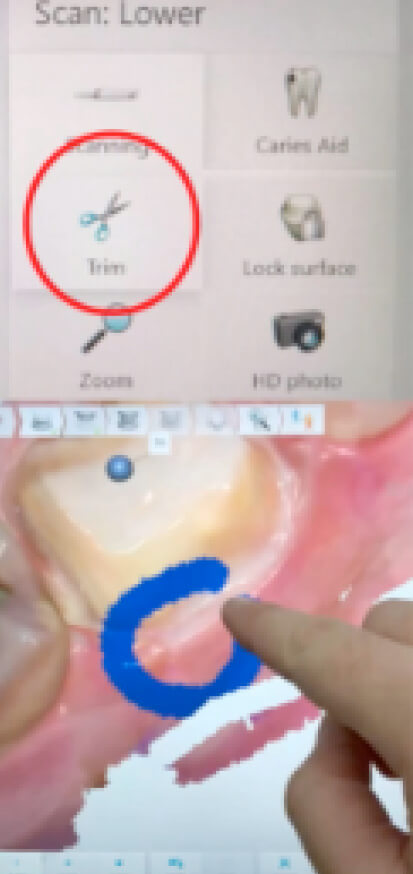
Seminar content: The introduction of intraoral optical digital acquisition devices is a logical consequence of the CAD/CAM production process, which is now standard in many laboratories. Meanwhile, the accuracy of most scanners available on the market is at least equal to analog impressions, even in the whole-jaw region, and in many recent studies superior. Scanning of large restorative work, implant situations or for the fabrication of an occlusal splint is now possible. A coordinated workflow with the dental laboratory is important here. There are significant differences between the scanners available on the market. As a user, you have to ask yourself in which areas of application you want to use the scanner. The introduction of new technologies and software options make the intraoral scanner more than just an impression machine. It is now possible to carry out caries diagnostics as part of a scan, record real jaw movements or monitor tooth movements, abrasions, grinding facets or recessions by superimposing scans from different dates. Simulations in the context of smile design or aligner therapy are possible. Many new software options are sure to be introduced in the near future. Today, the question is no longer whether or when to opt for an intraoral scanner, but only which one.