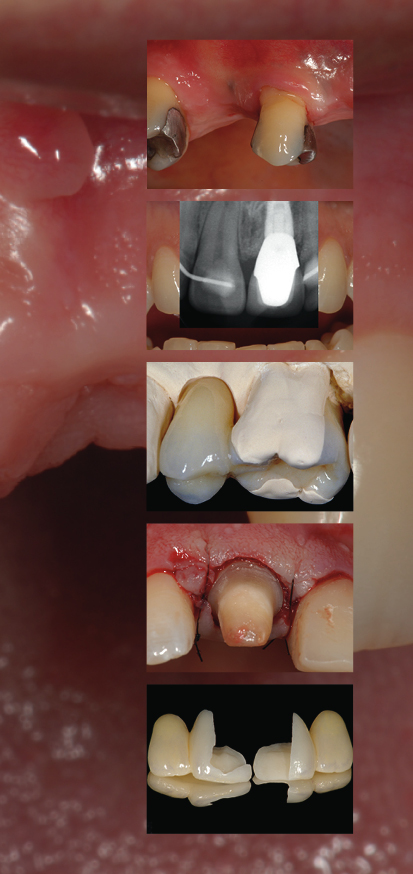
Course content: Our patients are keeping more and more teeth for longer and longer, which is why the search for the ideal treatment for the single tooth gap is an increasingly common issue. Not replacing the missing tooth may be sufficient in rare cases without long-term problems. Dental implants are highly promoted by the industry due to their many advantages. Their long-term disadvantages, such as step formation in the anterior region or gap formation in the posterior segment as well as peri-implantitis, are less frequently and reluctantly reported. Conventional three-unit bridges are also a must in a modern treatment concept, especially if crowns or larger reconstructions are already present on the adjacent teeth. Unfortunately, the aviator bridge, whether conventional or adhesive, is still struggling for more attention in the teaching of prosthetic dentistry. This presentation will critically demonstrate and scrutinize the possible types of treatment for the single-tooth gap in a colourful potpourri of clinical cases.
Highlights:
Tooth elongation, tilting
Conventional 3-unit bridges
Ceramic adhesive bridges vs. metal-supported
Mesial or distal flippers?
Which ceramics are suitable for ceramic bridges
Implants in the posterior segment with gap formation
Implants in the anterior segment with step formation
Single-tooth implants with screw retention? Cemented? With a plaster base
Suggested solutions for problems
A tried-and-tested prosthetic concept from the practice is presented